New Baby Sibling: Preparing Your Child and Easing Jealousy
How to prepare a toddler or preschooler for a new baby, handle jealousy and keep one-on-one time. Practical steps plus stories about becoming a big sibling.
A new baby changes a family, and for a toddler or preschooler that change can feel enormous. Even a child who is excited about the baby may act out, cling, regress or say “send her back.” That is not jealousy gone wrong. It is a normal reaction to losing some of your attention. This guide gives you practical ways to prepare your child before the birth and to help after the baby arrives.
Why an older child struggles
Until now your child was the center of the family. Suddenly the house is quieter during naps, visitors bring presents for the baby and your arms are full. Young children do not yet have the words for “I feel left out.” Instead you see tantrums, baby talk, toilet accidents or sudden clinginess. These behaviors usually mean “I still matter to you, right?”
Before the baby arrives
- Tell your child at the right time. For a toddler, a few months before the birth is enough, because time feels very long when you are two. Use simple words: “A baby is growing in my tummy. In the summer, you will be a big brother or sister.”
- Be honest about what a baby is like. Babies cry, sleep a lot and cannot play yet. “First she will just look at you, and you can show her things.”
- Look at baby pictures together. Show photos of your child as a baby and tell the story of how much you loved caring for them.
- Plan the practical bits. If your child needs to change rooms, move to a bed or start daycare, do it well before the birth, not right after.
- Give your child a role. A “big sibling” present or a special job, like choosing the baby’s blanket, helps a child feel important.
After the baby arrives
- Protect one-on-one time. Even ten minutes a day when the baby is with someone else and you give your child your full attention helps more than a big day out.
- Give real jobs. Fetching a diaper, singing to the baby or choosing the clothes. Praise helping, but let your child say no on days when they do not want to.
- Name the feelings. “It’s hard to wait while I feed the baby. You’d like me to play now.” Naming the feeling often takes the sting out of it.
- Accept some babyish behavior. A few weeks of wanting a bottle or being carried is normal. Treat it lightly and it usually fades.
- Keep the routines. Bedtime stories, favorite songs and the usual goodnight ritual are anchors. If you must change them, change them gently.
Bedtime with a baby in the house
Evenings are often the hardest time, because the baby needs you right when your older child wants you most. If you can, split the evening: one adult feeds or settles the baby while the other does bath, pajamas and a story with your older child. When you are on your own, keep a short, reliable ritual, such as one story and one song, and tell your child in advance: “First I feed the baby, then I come and sing to you.” Let your child hold a story book or choose the story while you feed the baby. Reading aloud from the sofa lets you do both at once. A baby who listens to stories from day one also learns the sound of your voice.
How stories help
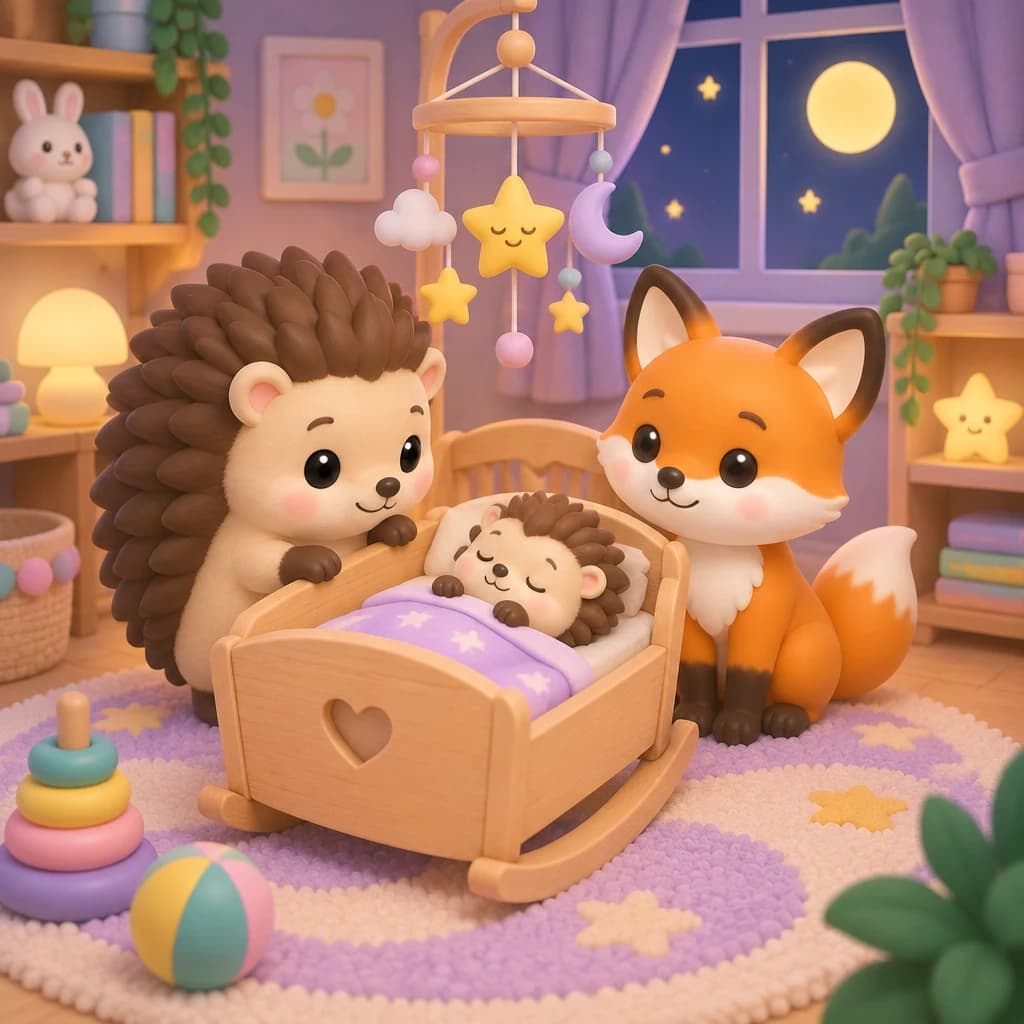
Stories give a child a safe way to look at the change. In Napmoon, The Hedgehog’s New Baby Sister (ages 4–6, about 5 minutes) follows Spike when a tiny sister arrives and he feels a little invisible. Rusty tells him she will learn from him first, and in the evening Spike hums her a song and the baby goes quiet. It shows that being a big brother is a real and important job. Toby and the Red Ball (ages 4–6) is about that prickly feeling in the tummy when someone else has something you want, which many siblings know well.
You can create a story as well. Enter your child’s name, choose “A new baby sibling” as the topic and a lesson such as empathy or patience, and the app builds a story where your child is the hero of the new family. Reading it together before and after the birth gives you a gentle way to talk.
What to avoid
- Pushing your child to “love the baby” on demand.
- Saying “you’re a big kid now” as a reason for losing comfort. Children can be big and still need cuddles.
- Comparing the two children, even in praise.
- Leaving them alone with the baby until they are older, no matter how gentle they seem.
When to look for support
Some regression and jealousy are expected for the first weeks or months. If your child seems very sad or angry for a long time, hurts the baby on purpose, stops eating or sleeping, or you are worried, talk to your pediatrician or a child psychologist. Looking after yourself matters too. A rested parent has more patience for everybody.
Stories on this topic

Common questions
When should I tell my toddler about the new baby?
Many parents wait until the pregnancy is visible, a few months before the birth. For a toddler, time feels long, so very early news can be confusing. Use simple words and repeat them often.
My older child is jealous of the baby. Is that normal?
Yes. It is one of the most common reactions. Give extra one-on-one attention, name the feeling and keep routines steady, and it usually eases with time.
Why is my child acting like a baby again?
Regression, such as baby talk or wanting a bottle, is a way of testing whether you still care for them. Stay relaxed, offer cuddles and praise grown-up behavior at other moments.
How can I keep one-on-one time with a newborn at home?
Use baby naps and times when another adult is around. Even ten minutes a day, with a phone away, is meaningful. Make it a ritual, such as a story on your lap.
Which stories help with a new sibling?
Try The Hedgehog’s New Baby Sister for ages 4–6, and consider creating a custom story in the app with your child’s name and the topic “A new baby sibling.”