Child Afraid of the Dentist? Preparing for the First Visit
How to prepare your child for the first dentist visit and ease fear: what to say, what to avoid, and stories that make the dental chair less scary.
For many young children, the dentist is a strange room with a big chair, bright lights and tools they have never seen. It is no surprise that some are afraid. The good news is that a little preparation can turn a first dentist visit into a quite ordinary morning. This guide shows you how to talk about it, what to do on the day and how to make teeth brushing at home part of the same friendly picture.
Why children fear the dentist
Fear of the dentist usually comes from the unknown: unfamiliar sounds, a stranger looking in your mouth, lying back in a chair. Young children also pick up our own feelings. If you are tense about the dentist, your child will notice. Past experiences, such as a sore tooth, can add to it. Understanding where the fear comes from helps you answer it.
Before the visit: how to prepare
- Choose a dentist who is used to children. A pediatric dentist or a practice with a relaxed approach to little patients can make a big difference. Ask whether a short “get to know you” visit is possible.
- Talk about it simply. “The dentist counts your teeth and makes sure they are strong. She will show you the chair and a little mirror.” Use true, calm words, and skip the words “hurt” and “pain.”
- Play dentist at home. Take turns being the dentist and the patient with a toy and a toothbrush. Let your child count your teeth and open wide.
- Read about it. A story helps your child picture what will happen and see that other children feel nervous too.
- Check the time of day. Choose a time when your child is rested and fed, not just before a nap.
On the day
- Arrive a little early so there is time to look around.
- Stay calm and positive. Your face is the best signal your child has.
- Let your child bring a favorite toy or blanket.
- Ask the dentist to explain each step in simple words: “This is the mirror. This sounds like a buzzing bee.”
- Praise bravery afterwards. Keep rewards small, such as a sticker or an extra story, and avoid making them too big, which suggests the visit was scary.
Brushing at home
Dentist fear often connects to brushing teeth. Make it a song, a game or a small ritual. Let your child choose a toothbrush with a favorite character. Count slowly to thirty together. Take turns: your child brushes, then you “check” the teeth. When brushing feels like play, the dentist’s chair feels less foreign. Ask your dentist at the first visit how to brush and how often to come back.
The bedtime teeth ritual
Evening brushing is the best practice for the dentist. Make it a fixed part of the routine: pajamas, brushing, one story, lights down. Stay with your child, take turns brushing and let them look in the mirror. A calm, warm toothbrush time every night builds the same trust the dentist needs: a stranger looks at your teeth, nothing bad happens and you get a smile. If your child resists, sing, count or let a favorite toy “brush” first.
How stories help
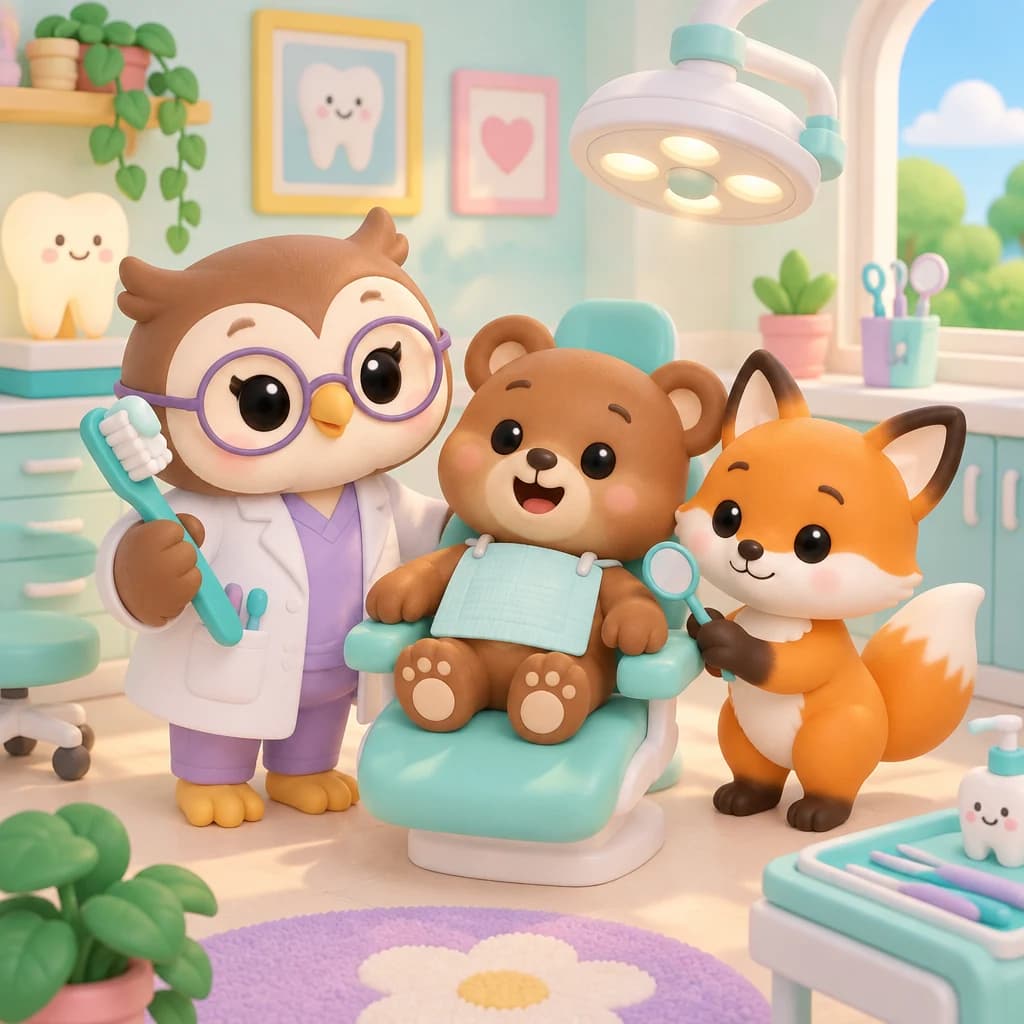
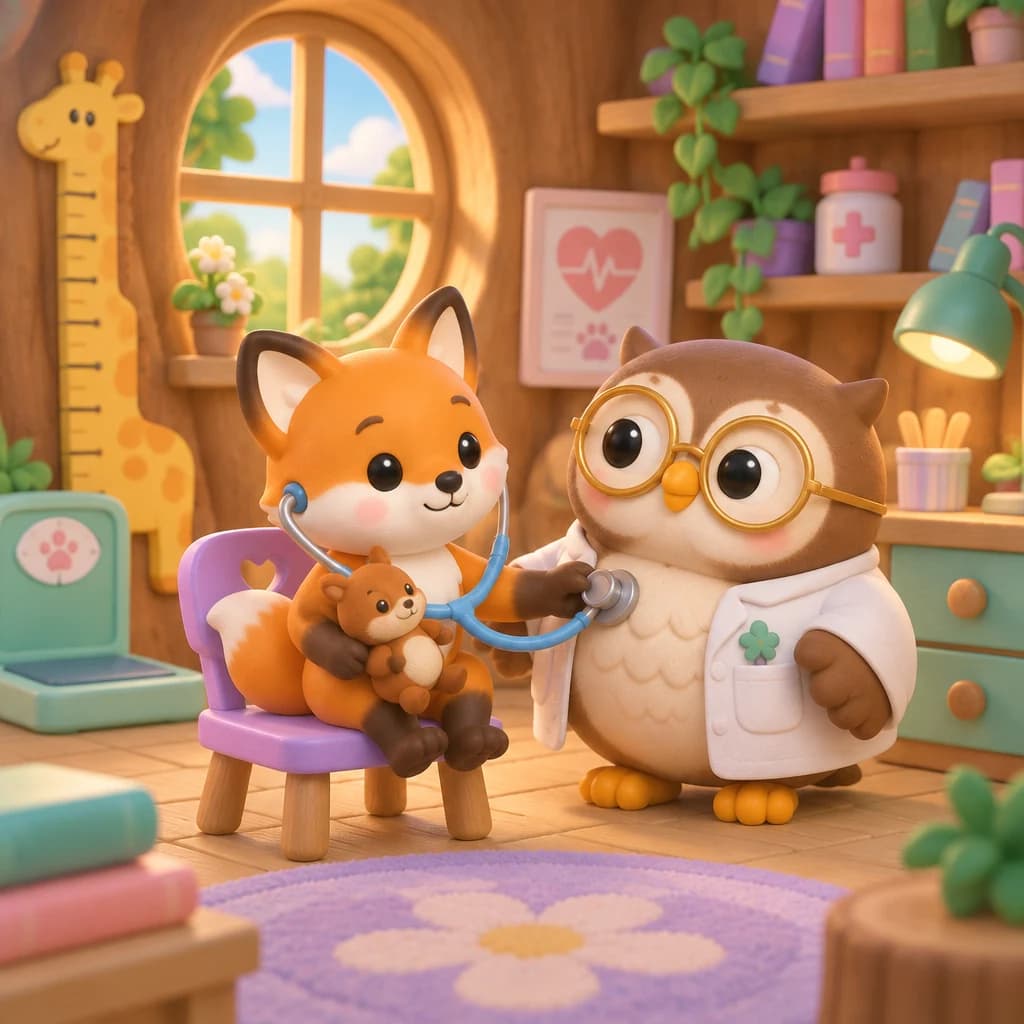
A story shows the visit in advance, in small, friendly steps. In Napmoon, The Bear at the Dentist (ages 4–6, about 4 minutes) follows Toby, who loves honey very, very much and is going to the dentist for the first time. In her office Hootie the owl, in a white coat, asks to see his teeth, the chair slowly rises with a bzzz, and Rusty holds up a little mirror so Toby can see. Toby leaves with a sticker and a promise to brush every day. Hoppy Brushes His Teeth (ages 2–4, about 3 minutes) turns evening brushing into a song, and Rusty Visits the Doctor (ages 4–6) explains a check-up calmly.
You can also create a story with your child’s name. Choose “A trip to the dentist,” pick a world and a lesson such as courage, and your child becomes the hero who counts their own teeth and leaves with a smile. Read it the evening before the visit.
What to avoid
- Using the dentist as a threat (“If you don’t brush, the dentist will drill”).
- Promising “it won’t hurt at all” when you can’t be sure. Say “the dentist will go slowly and tell you what is happening.”
- Telling your own scary stories about dental visits in front of your child.
- Skipping the visit because your child is afraid. Short, friendly visits are what build confidence.
When to seek help
Some nervousness is normal. If your child’s fear is very strong, causes panic, prevents any visit or comes with other fears, talk to your dentist and your pediatrician. Many practices have tools for anxious children, and a child psychologist can help with a deeper fear.
Stories on this topic

Common questions
When should a child first go to the dentist?
Ask your dentist or pediatrician. Many recommend starting once the first teeth have come in, so the visits become familiar before there is any problem.
How do I prepare my toddler for the dentist?
Talk about it in simple words, play dentist at home, read a story and choose a calm time of day. Stay relaxed yourself, because children copy your mood.
My child refuses to open their mouth. What can I do?
Stay patient and make it a game. Practice at home with a toothbrush and a mirror, and let your child be the dentist for a toy. A pediatric dentist will know how to go slowly.
Should I promise a reward after the visit?
A small, simple treat such as a sticker or an extra story is fine. Avoid big prizes, which suggest that the visit is something to be endured.
Which stories help before the dentist?
The Bear at the Dentist (ages 4–6) and Hoppy Brushes His Teeth (ages 2–4) are good places to start, and you can create a custom story with your child’s name in the app.