Child Afraid of the Dark? What Helps at Bedtime
Is your child afraid of the dark? Calm, practical steps for bedtime, plus stories that make the night feel friendlier. For parents of kids ages 2–8.
If your child is afraid of the dark, you are in very good company. Somewhere between ages two and six, most children start to notice shadows, creaks and the odd shape of a coat on a chair. It can feel sudden: a toddler who slept happily last month now calls out three times after lights out. This guide explains why it happens and what you can say and do, step by step, so the night feels friendly again.
Why a child gets afraid of the dark
Imagination is the reason. Around age two or three, children begin to picture things that are not in front of them. That is wonderful in the daytime, when a banana becomes a telephone. At night, with less to look at, the same imagination fills the dark with ideas. A child this age cannot always tell what is real and what is pretend, and the dark takes away the usual proof.
There is a practical side too. Bedtime means being apart from you. Many children who say “I’m scared of the dark” are also saying “I don’t want you to leave.” Both are worth listening to.
What to say and do: five steps
- Take the fear seriously. Skip “there’s nothing to be afraid of.” Try “That sounds scary. I’m right here.” A child who feels understood calms down faster than one who is told they are being silly.
- Ask, then listen. “What does the dark look like to you?” Some children describe a monster, others only say it is “too black.” Knowing which helps you choose the right fix.
- Make the room friendlier, not emptier. A small night light with a warm glow, the door open a hand’s width and a familiar sound from the hallway are often enough. Dim warm light is easier on sleepy eyes than bright white.
- Do a short room check together. Look behind the curtain, under the bed and in the wardrobe, and keep it to a minute and a bit playful. You are showing that the room is just the room, not hunting for something.
- Give your child a plan for the scary moment. Hug a favorite soft toy, take five slow breaths, or call once and you will come. Knowing what to do gives a small person a feeling of control.
Build an evening that turns the volume down
Fear grows when the evening is rushed. A steady order helps more than any gadget: bath or wash, pajamas, teeth, one story, a song or quiet chat, lights down. Keep the order the same every night, and dim the lights in the house about half an hour before sleep. Try to keep bright screens and fast cartoons away from the last hour, because busy pictures tend to follow children into bed.
Daytime matters too. Play games that make the dark fun: a flashlight hunt in a dim room, shadow animals on the wall, hide and seek with the lights low. Familiarity takes the edge off.
How stories help
A story lets a child meet a fear from a safe distance. Hearing that a bear also hears strange noises, and that the noises turn out to be an owl and some crickets, lets a child practice bravery in their head with you right there. In Napmoon, Toby Listens to the Night Forest (ages 2–4, about 3 minutes) does exactly this: Toby hears mysterious sounds in the dark, and Hootie the owl and Croaky the frog help him find out where they come from. Toby and the Nighttime Storm (ages 4–6) and Hoppy’s First Sleepover (ages 4–6), where Hoppy misses home when the lights go out, are good next steps. For ages 6–8, Rusty and the Lamplighter of Tall Pine is a quiet tale about the lights of the forest going out one by one.
You can also create a story where your child is the hero. Type in their name, choose “Fear of the dark” as the topic, pick a world and a lesson such as courage, and Napmoon writes a story in which your child meets the night and finds it friendly. Read it yourself, or add a narrator and listen together.
What to avoid
- Jokes about monsters or the “boogeyman,” even kind ones. They give the fear a face.
- Using the dark as a threat or a punishment.
- Scary stories, videos or games in the evening.
- Staying until your child is deeply asleep every night if you want to change that later. Instead, say “I’ll sit here for five minutes and then check on you,” and keep your word.
When to ask for help
Fear of the dark is a common stage and usually eases over weeks or months with calm, steady support. If the fear is very intense, lasts for many months, keeps your child from sleeping on most nights, comes with other worries during the day or began after a stressful event, it is worth talking to your pediatrician or a child psychologist. You know your child best, and asking is never an overreaction.
Stories on this topic
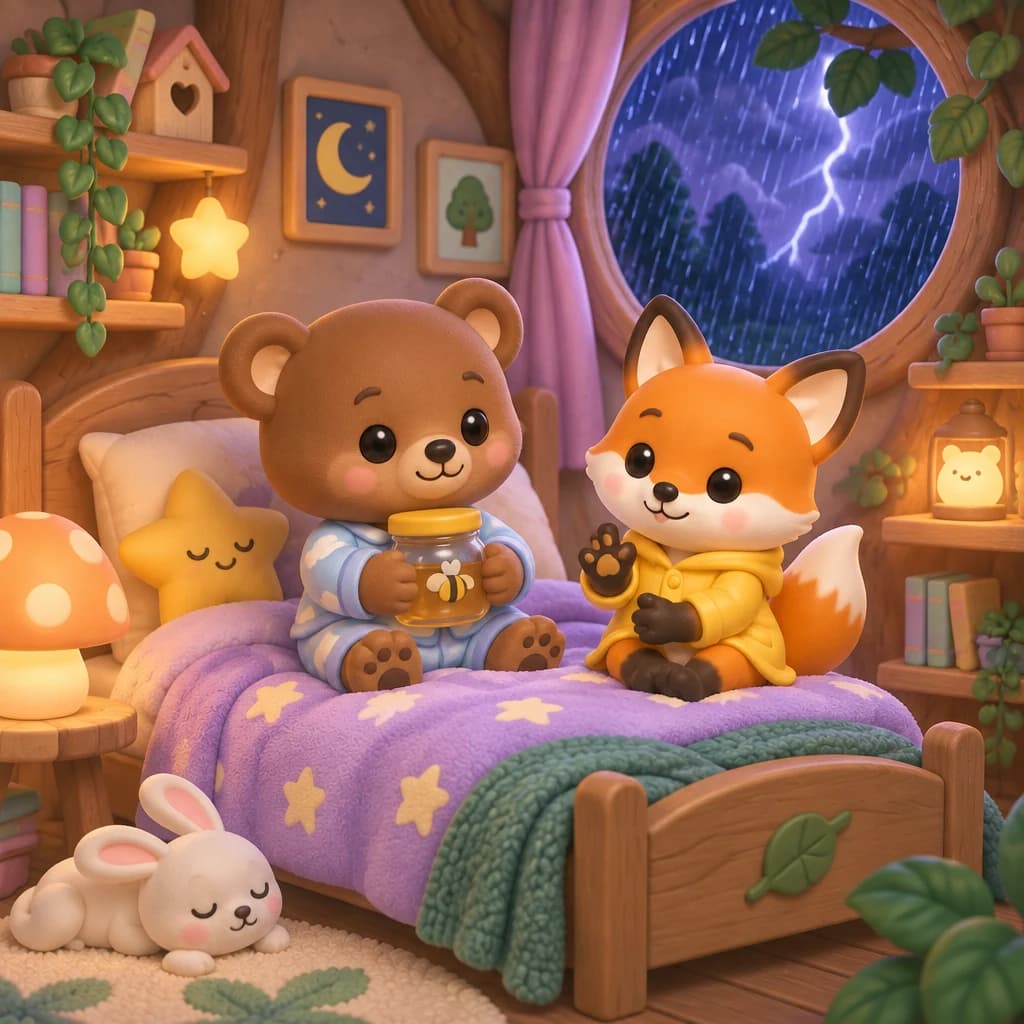
Toby and the Nighttime Storm
Ages 4–66 min read
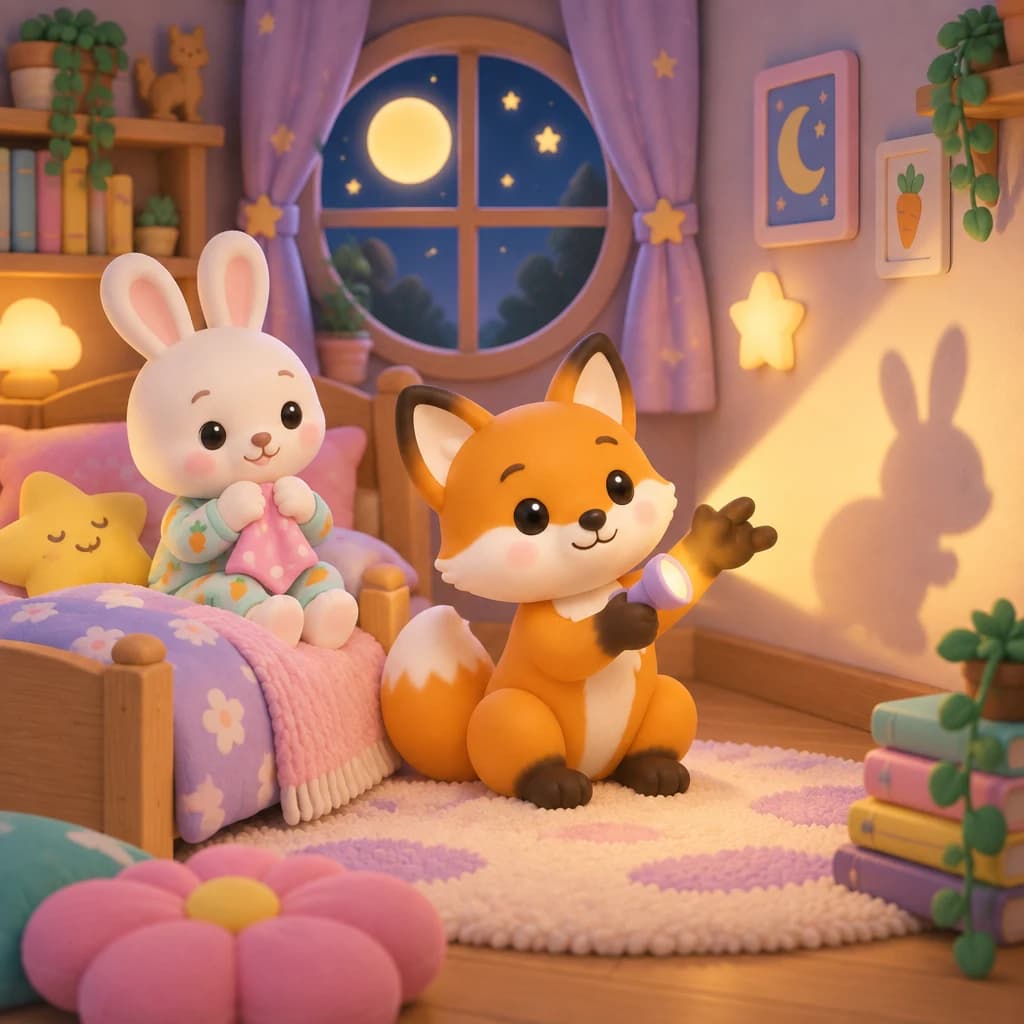
Hoppy’s First Sleepover
Ages 4–67 min read
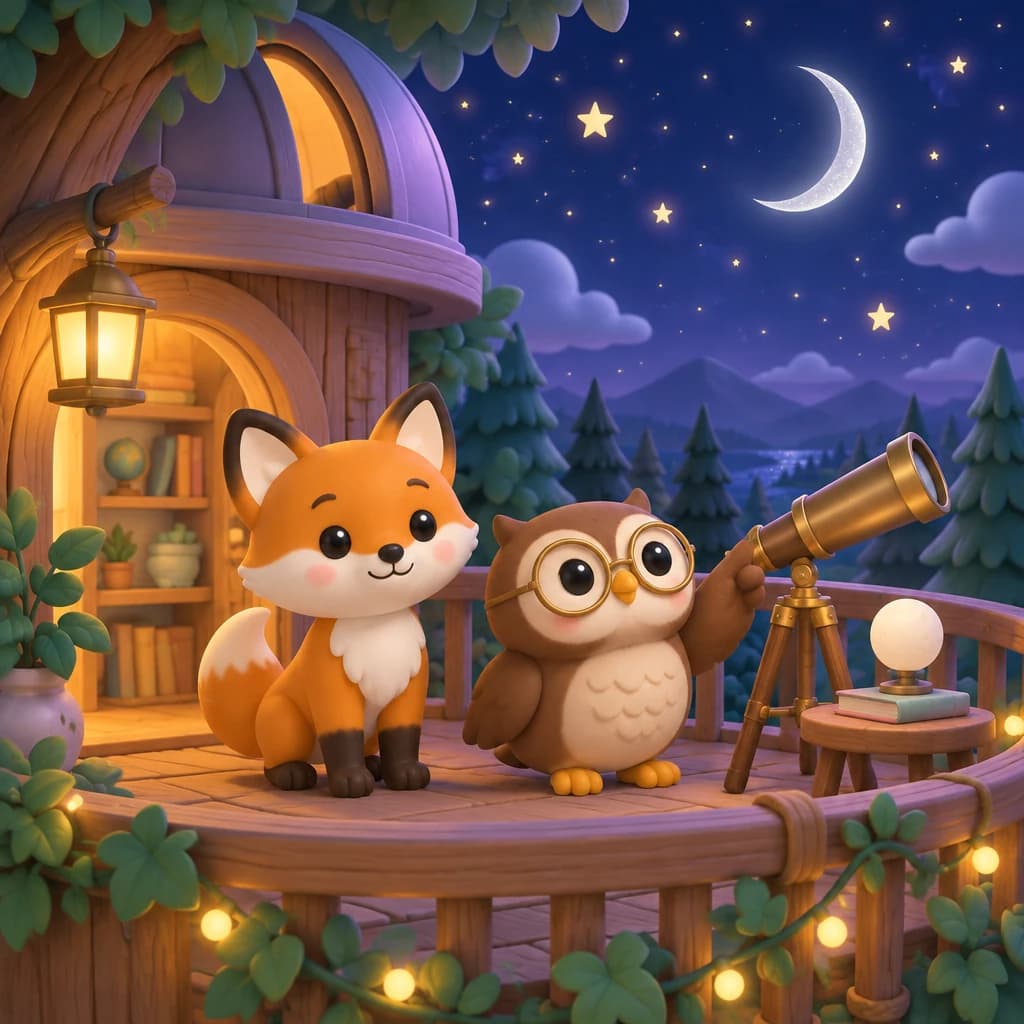
Where Did the Moon Go?
Ages 6–89 min read
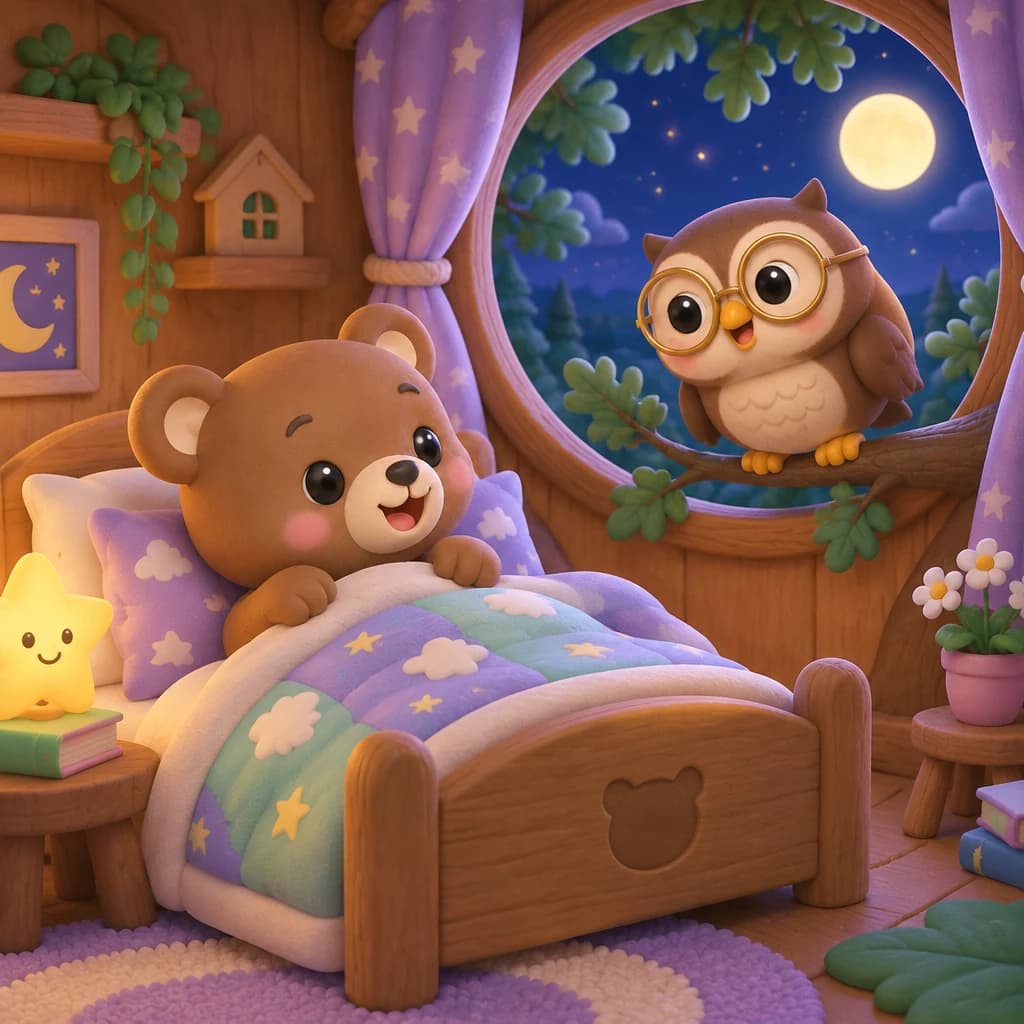
Toby Listens to the Night Forest
Ages 2–43 min read
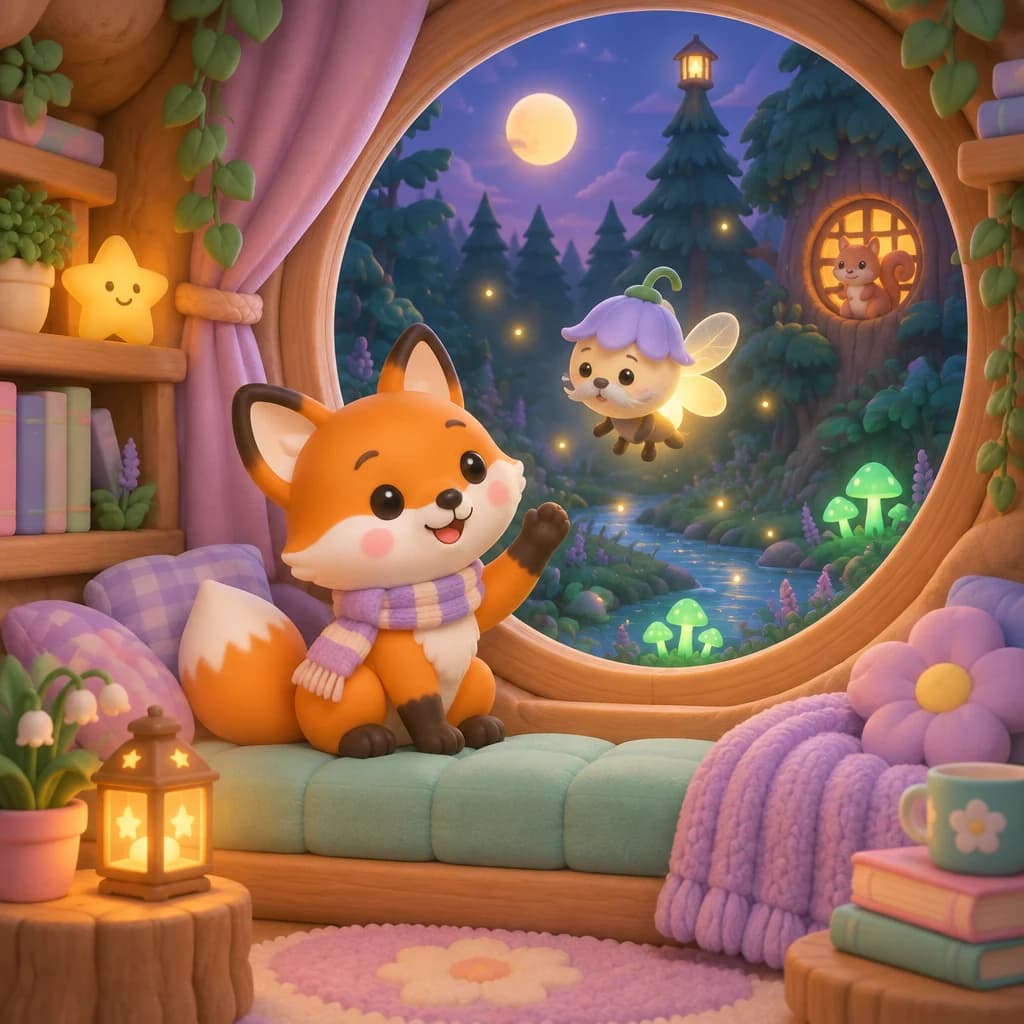
Rusty and the Lamplighter of Tall Pine
Ages 6–86 min read
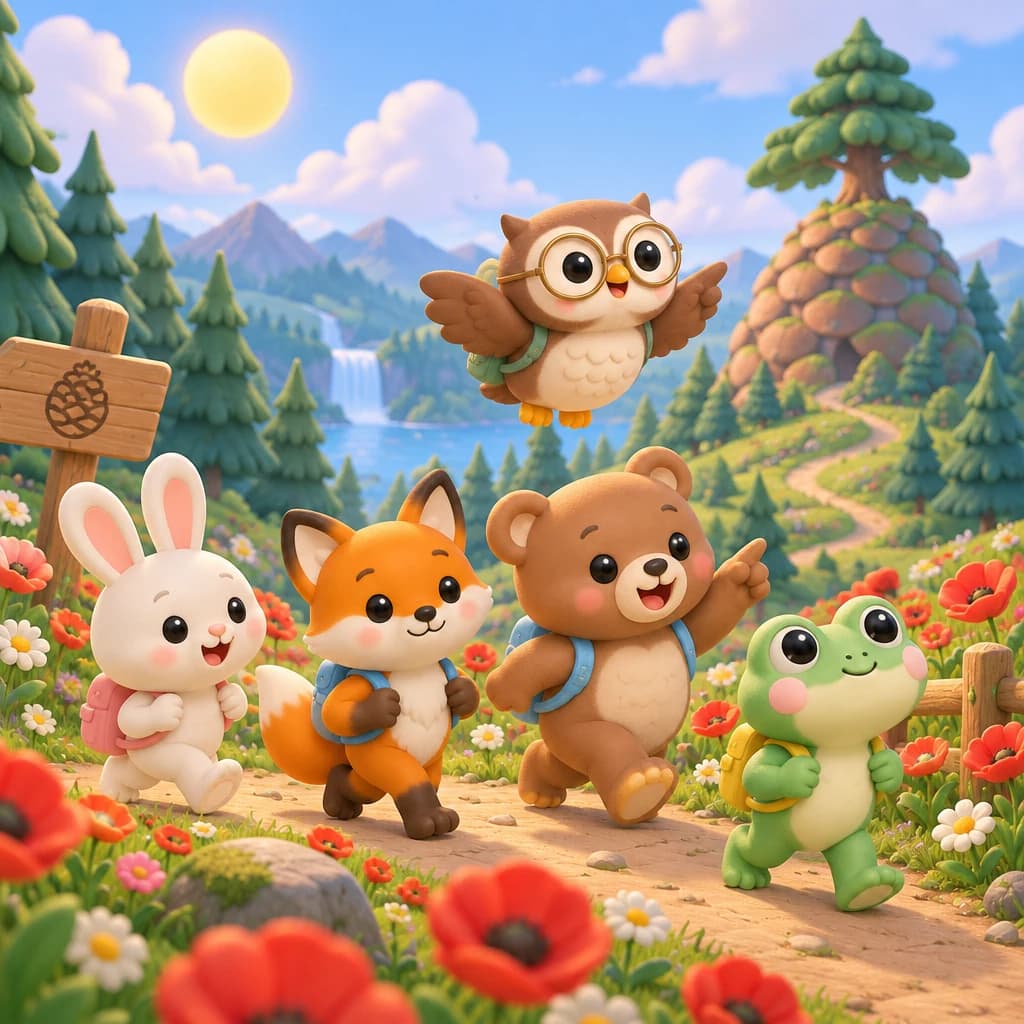
Hoppy and Pinecone Peak
Ages 6–89 min read
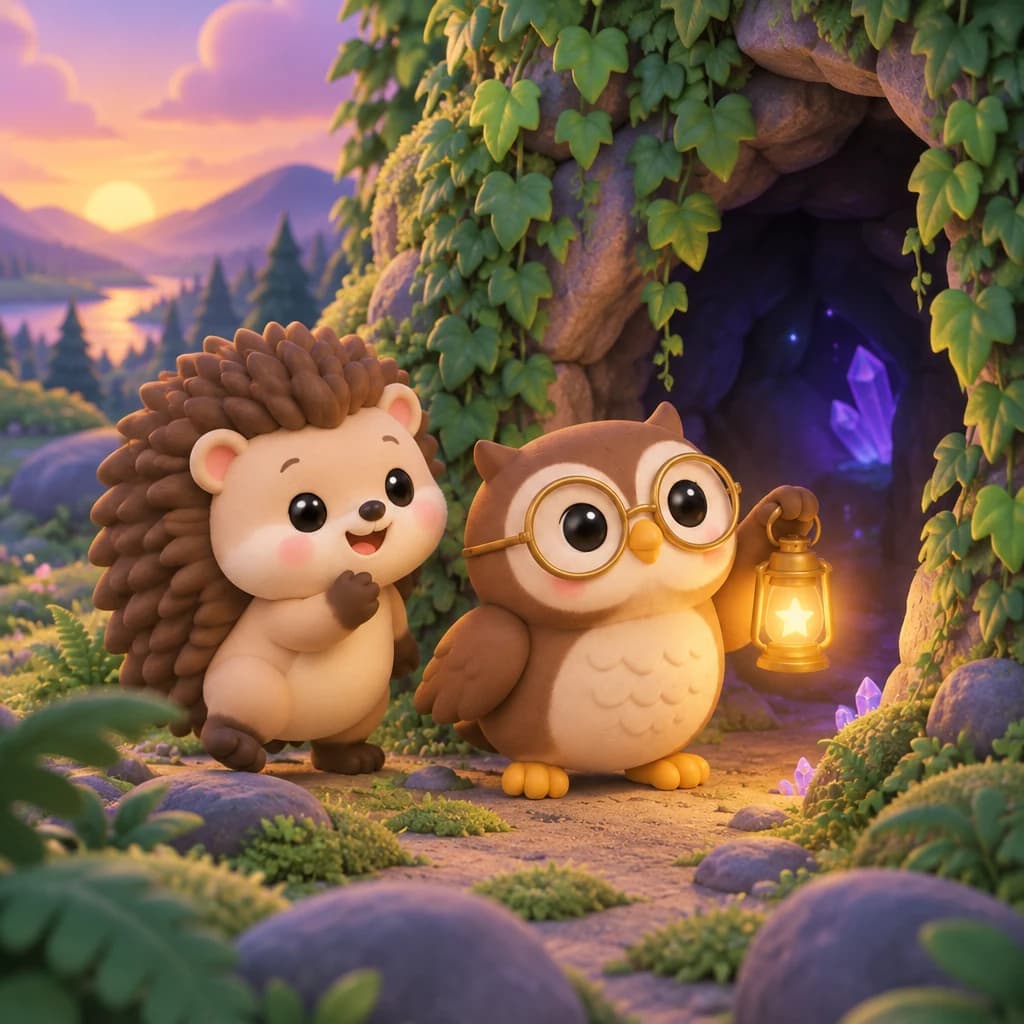
Spike and the Crystal Cave
Ages 6–89 min read
Common questions
At what age is fear of the dark normal?
It is very common between about ages 2 and 6, when imagination is growing fast. It can also come back around starting school or after a change at home.
Should I use a night light?
Many families do, and it is a fine choice. Pick a dim, warm light and keep it the same every night. Children can give it up later, often when they are ready.
My child keeps coming into our bed. What can I do?
Stay calm and kind, walk them back with a hug and use the same short sentence each time, such as “It’s sleep time, I’m just down the hall.” A clear bedtime routine and a plan for the scary moment usually help.
Can a story really help with fear of the dark?
A story will not remove the fear on its own, but it gives your child words for it, shows a character getting through it and gives you a calm, shared moment. It works best together with a steady routine.
Are the stories in the app scary?
No. Stories are written for ages 2–8 and checked to keep nighttime sounds and storms gentle. Read the short description first if your child is sensitive to a topic.